
Southwest China in Five Voices: A 13-Day Journey from the Stone Forest to the Mountains of Kham
Five Ethnic Minorities, Five Living Traditions — From the Sani People's Stone Forest to the Watchtowers of Danba and the Grasslands of Tagong
Last updated: August 21, 2026
Plan this tourOverview
Trip Highlights
Stone Forest · High-speed train to Dali · Bai tie-dye workshop in Zhoucheng village · Xizhou ancient town · Woodblock printing workshop · Erhai lakeside cycling · High-speed train to Lijiang · Black Dragon Pool · Baisha murals · Naxi family visit with Dongba script writing · Naxi ancient music · Tiger Leaping Gorge viewpoint · Dukezong Ancient Town · Giant Prayer Wheel · Wild mushroom foraging with Tibetan villagers (seasonal) · Nixi black pottery experience · Songzanlin Monastery · Afternoon flight to Chengdu · Balang Mountain pass · Shuangqiao Valley · Danba Zhonglu Jiarong Tibetan village · Suopo ancient watchtowers · Mo Shi Park at Bamei · Tagong Grassland · Tagong Temple · Xinduqiao · Kangding · Ya'an · Bifengxia Panda Base · Face-changing Sichuan opera performance · People's Park
Day-by-Day Itinerary
Arrival in Kunming, Stone Forest
Arrive at Kunming Changshui International Airport, where your guide and driver will meet you and transfer you to your hotel. Kunming, known as the Spring City for its mild year-round climate, is the capital of Yunnan Province and the gateway to China's southwest — a region where dozens of ethnic minorities have coexisted for millennia along the ancient trade routes connecting inland China with Tibet and Southeast Asia.
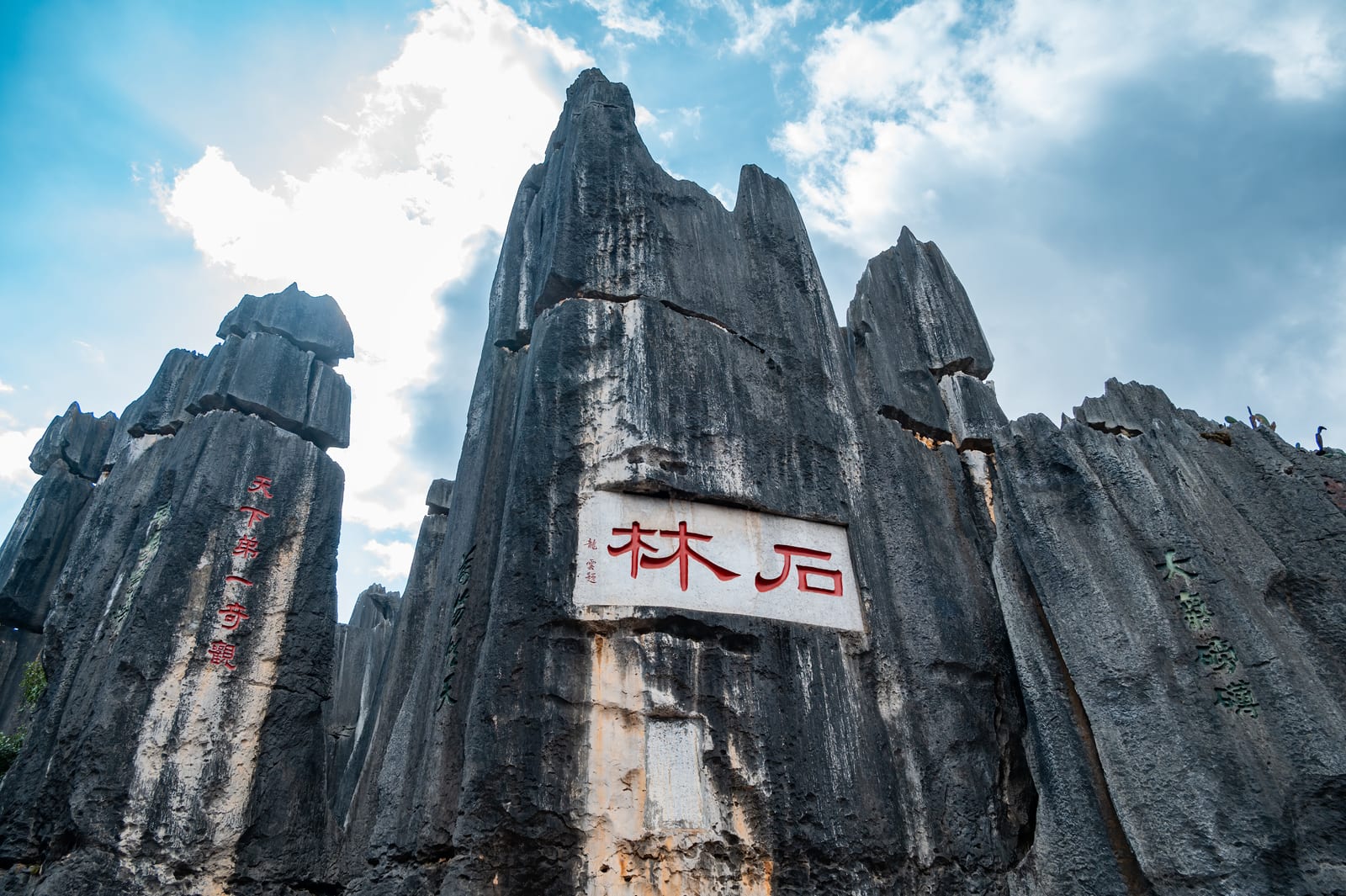
After a brief rest, drive approximately 1.5 hours to the Stone Forest, a UNESCO World Heritage site and one of the most spectacular karst landscapes on Earth. Over 270 million years ago, this area lay beneath a shallow sea; tectonic uplift and millions of years of rainfall have sculpted the limestone into a vast forest of stone pillars, some rising over 30 metres, arranged in labyrinthine formations across 400 square kilometres.
The Stone Forest is also the heartland of the Sani people, a branch of the Yi ethnic minority. Your guide will share the legend of Ashima — the beautiful Sani girl who, according to oral tradition, was turned to stone rather than submit to an unwanted marriage. Her likeness is said to stand among the pillars to this day. The Sani celebrate the Torch Festival each summer, when entire villages light bonfires and dance through the night. Return to Kunming in the late afternoon. If time permits, take an evening stroll around Green Lake Park, where locals gather for music, dancing and tea under the willow trees.
High-Speed Train to Dali, Bai Tie-Dye Workshop
After breakfast, transfer to Kunming Railway Station and board a high-speed train to Dali. The route crosses the red-earth plateaus of central Yunnan before descending into the Erhai Lake basin, where the Cangshan mountain range rises sharply to the west and the waters of Erhai stretch to the east.
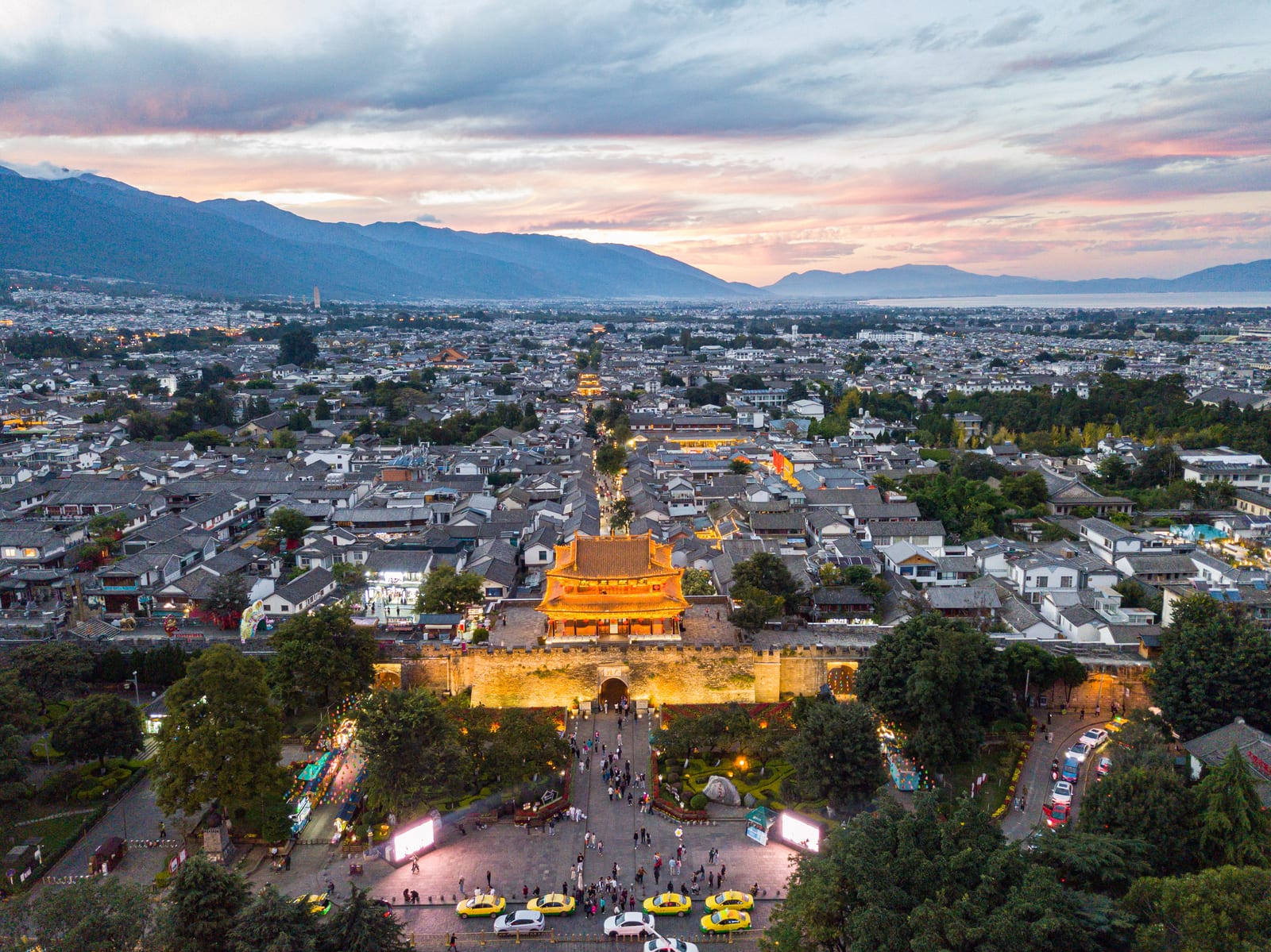
Dali has been a cultural crossroads for over a thousand years. It was the capital of the Nanzhao Kingdom (738–902) and later the Dali Kingdom (937–1253), two states that ruled much of what is now Yunnan and maintained active trade and cultural exchange with Tang and Song China, Tibet and Southeast Asia. The Bai people, who have inhabited this region for centuries, are renowned for their architecture, tea culture and textile arts.
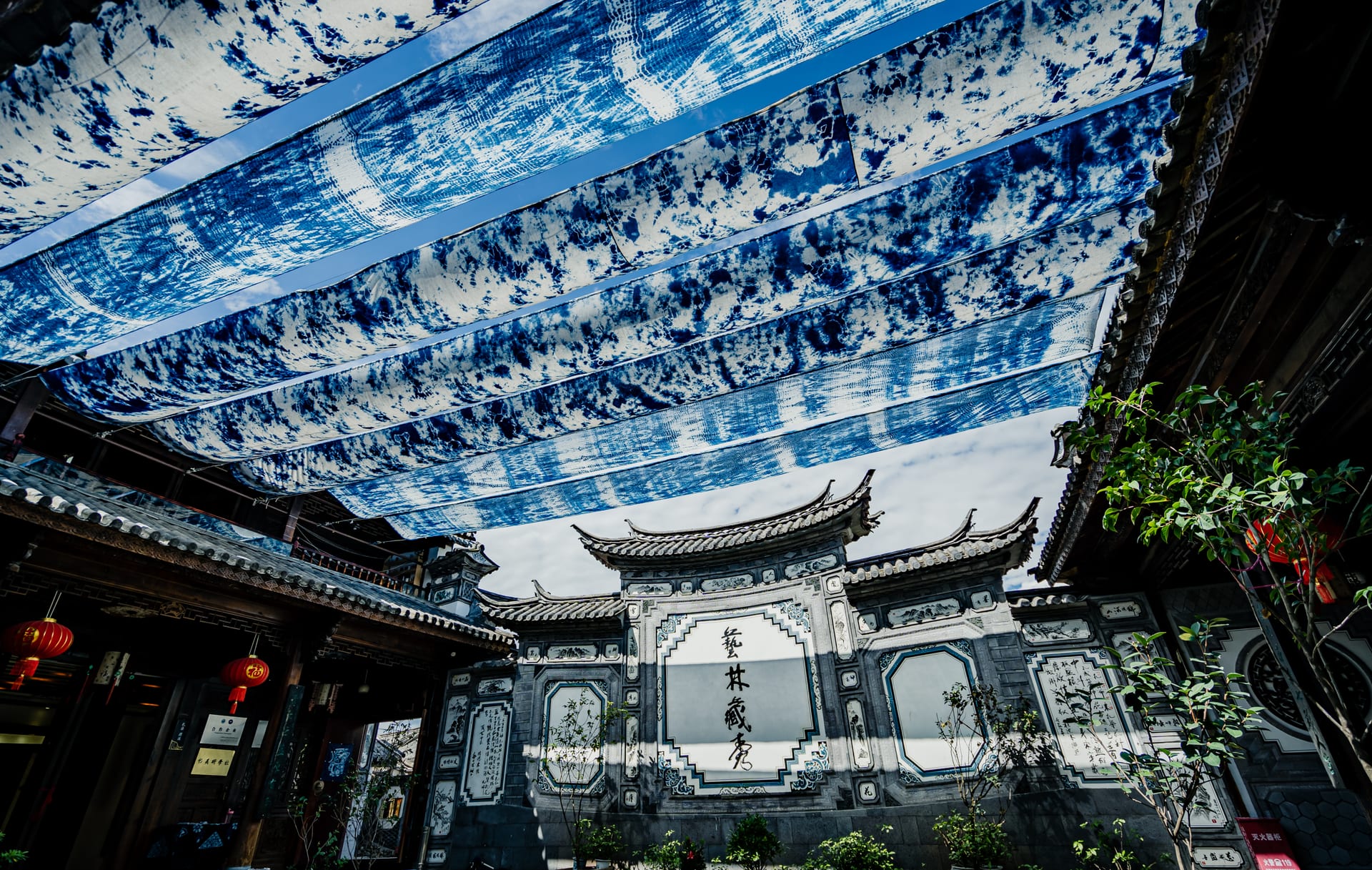
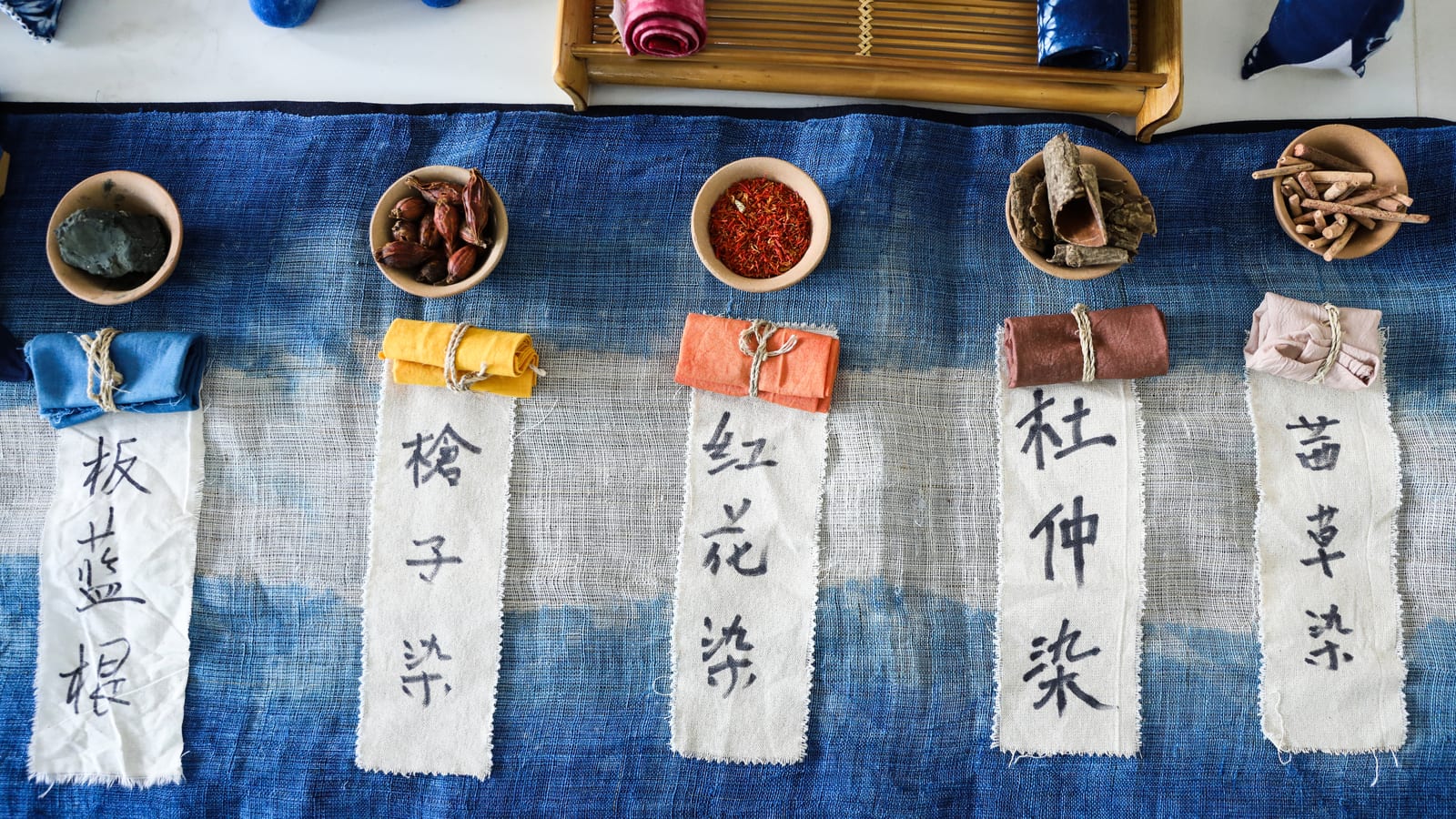
In the afternoon, drive to Zhoucheng village, approximately 25 kilometres north of Dali Old Town. Zhoucheng is the largest Bai settlement in the region and the centre of traditional tie-dye, a craft practised here for generations. Visit a family workshop where Bai artisans will guide you through the entire process: selecting the white cotton cloth, folding and binding it with thread to create patterns, dipping it into vats of natural indigo dye extracted from the indigo plant, and finally unraveling the bindings to reveal the finished design. Each piece is unique, and you will create your own tie-dye scarf to take home as a personal souvenir. The deep blue and white patterns — featuring flowers, butterflies, fish and traditional Bai motifs — reflect a craft that was inscribed on China's national intangible cultural heritage list in 2006.
Xizhou Ancient Town, Woodblock Printing, Erhai Cycling
After breakfast, drive to Xizhou Ancient Town, approximately 18 kilometres north of Dali. Xizhou was once a prosperous trading hub on the Tea Horse Road, home to wealthy Bai merchant families whose courtyards — known as the "sanfang yizhaobi" and "sihe wutianjing" styles — combine Bai, Han and Western architectural elements in carved gateways, painted beams and tiled roofs. Walk through the town's morning market, where Bai farmers sell fresh produce, rice noodles and local cheeses, and visit several of the best-preserved courtyard residences, including the Yan Family Compound.
In a traditional Bai courtyard, experience the three-course tea ceremony, a Bai custom that dates back to the Tang Dynasty. Each cup carries a distinct flavour and symbolic meaning: the first is bitter, representing life's hardships; the second is sweet, symbolising the rewards of perseverance; and the third is savoury with a hint of aftertaste, reflecting the wisdom that comes with age and experience.
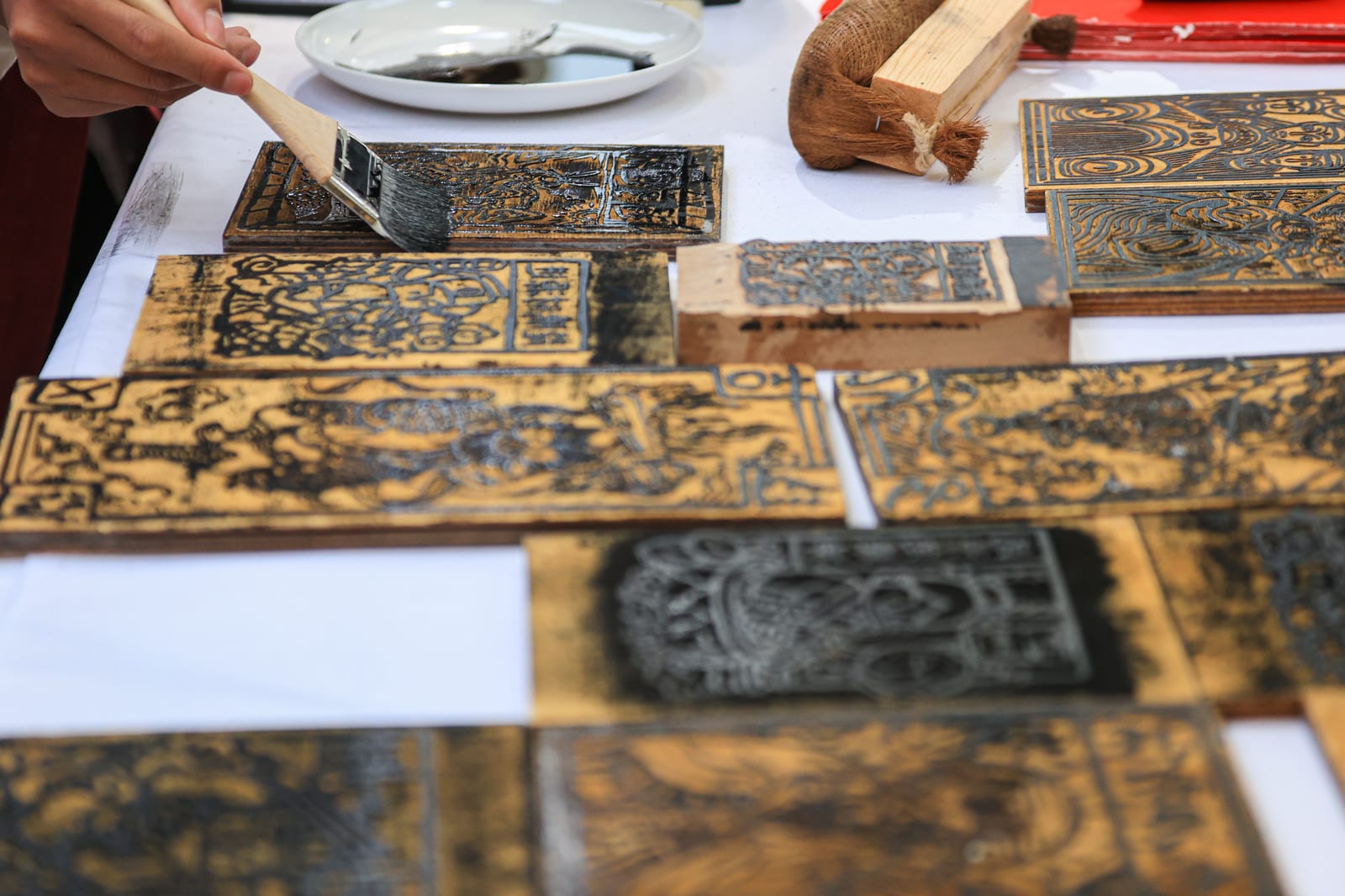
In the afternoon, visit a Bai intangible cultural heritage workshop to experience traditional woodblock printing, known locally as jia ma or zhi ma. This folk art involves carving intricate designs onto wooden blocks and printing them onto rice paper. Historically, Bai villagers printed these images as offerings to local deities for protection, good harvests and safe travels — and caravans on the Tea Horse Road carried them as talismans. Under the guidance of a master artisan, you will ink a carved block and print your own jia ma sheet to take home.
In the late afternoon, cycle along the Erhai West Shore Ecological Corridor, a dedicated path that runs between the lake and the Cangshan foothills. The route passes through Bai villages, rice paddies and groves of ancient banyan trees, with the lake's still waters reflecting the evening light. Stop in Longkan or Caicun village for a lakeside rest before returning to your hotel.


High-Speed Train to Lijiang, Black Dragon Pool, Baisha Murals with Naxi Family Visit
After breakfast, transfer to Dali Railway Station and take a high-speed train to Lijiang. The route follows the Erhai lakeshore northward before climbing into the mountains of northwestern Yunnan, where the landscape shifts from Bai farmland to Naxi territory. Lijiang sits at an elevation of 2,400 metres, sheltered by Jade Dragon Snow Mountain to the north; its old town, a UNESCO World Heritage site since 1997, is a lattice of canals, cobblestone streets, stone bridges and timber-framed courtyard houses that have changed little in five centuries.
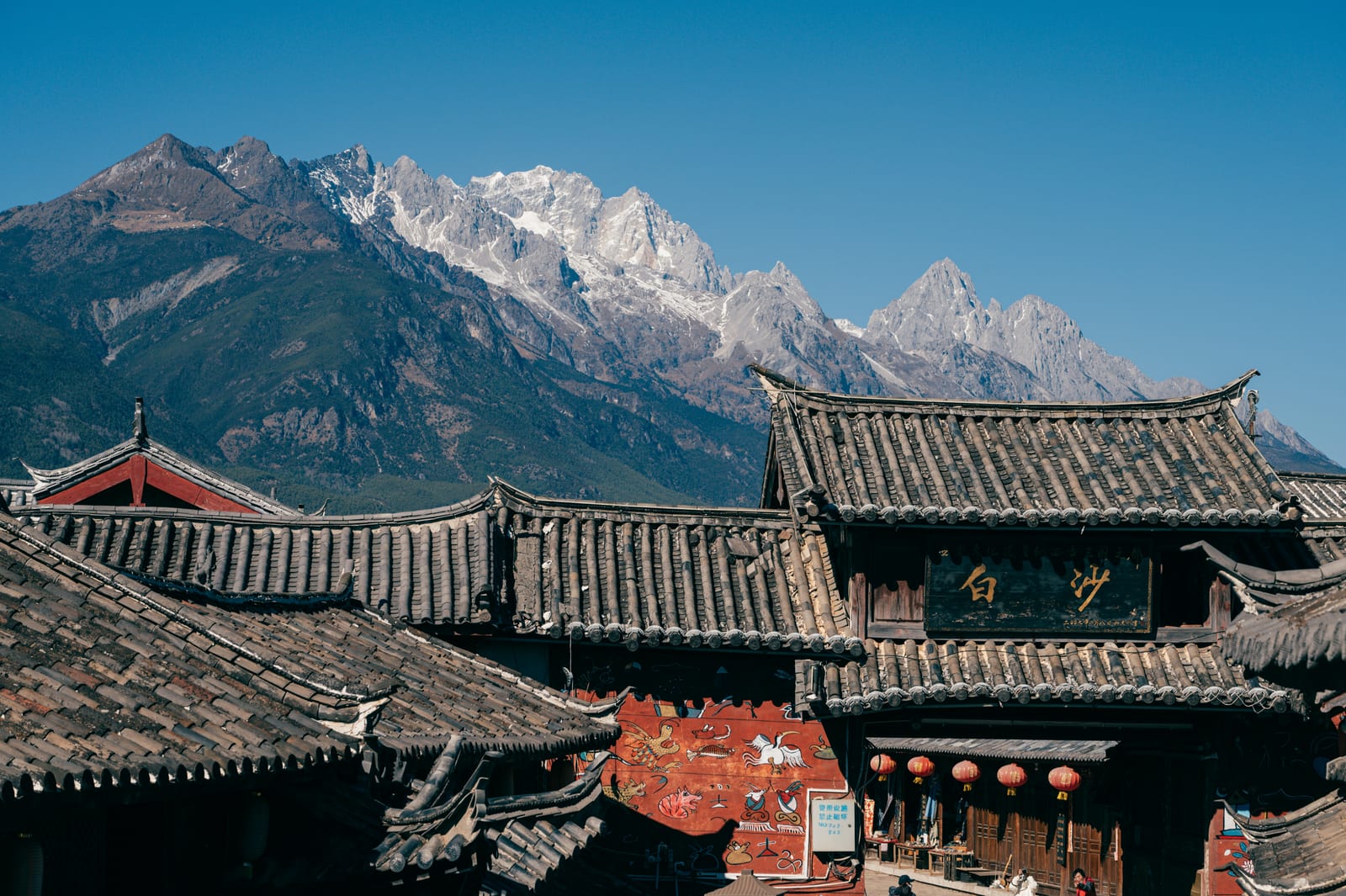
Around midday, visit Black Dragon Pool, a park at the foot of Elephant Hill just north of the old town. Fed by springs from Jade Dragon Snow Mountain, the pool reflects the thirteen snow-capped peaks of Yulong Xueshan on a clear day — one of the most iconic views in all of Yunnan. Throughout this journey, Jade Dragon Snow Mountain is viewed only from afar; no cable car ascent is included.
In the afternoon, drive to Baisha Ancient Town, the earliest settlement of the Naxi people and the former capital of the Naxi Mushi chieftains. Baisha retains a quieter, more authentic atmosphere than Lijiang Old Town, with unpaved lanes, traditional courtyard houses and farmland extending to the base of the mountain. Its highlight is the Baisha Murals, a collection of frescoes painted between the early Ming and early Qing dynasties, remarkable for bringing Han Chinese, Tibetan and Naxi artistic traditions — Buddhist, Taoist and Dongba deities — into the same compositions; the best-preserved panels are in Dabaoji Palace and Liuli Palace.
The day concludes with a visit to a Naxi family home near Baisha or Shuhe. A Naxi elder will introduce you to the Dongba script — the world's last living pictographic writing system — and you will have the opportunity to try writing Dongba characters on rice paper with a traditional bamboo pen. Afterwards, listen to a performance of Naxi ancient music, a repertoire of Taoist and Confucian court music preserved by the Naxi since the Ming and Qing dynasties — pieces long lost elsewhere in China survive here in living tradition. The evening is free to explore Lijiang Old Town at your own pace.

Tiger Leaping Gorge Viewpoint, Dukezong Ancient Town
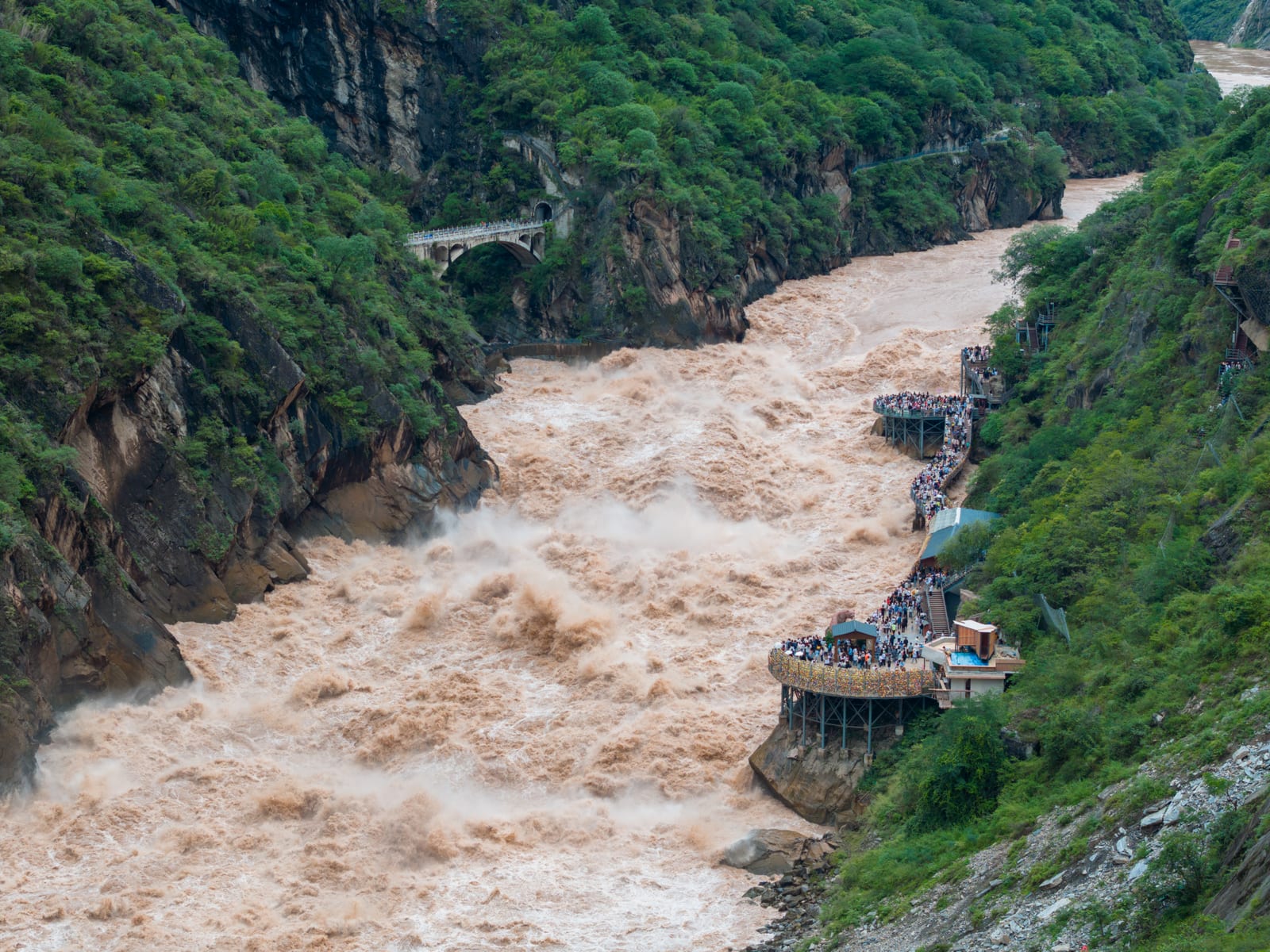
After breakfast, depart Lijiang by road for Shangri-La, driving north through the dramatic gorges of the Jinsha River — the upper course of the Yangtze. En route, stop at the Tiger Leaping Gorge viewpoint, where the river narrows to barely 30 metres and thunders between Jade Dragon Snow Mountain and Haba Snow Mountain in one of the deepest gorges in the world, with vertical drops of up to 3,900 metres from summit to river. According to legend, a tiger once leapt across the chasm at its narrowest point, giving the gorge its name. The upper viewpoint section offers a dramatic but accessible vantage over the roaring rapids.
The drive continues upward through pine forests and yak pastures, the air thinning and cooling as the road climbs toward the Tibetan Plateau. At approximately 3,300 metres elevation, you arrive in Shangri-La — the name adopted by the Chinese government in 2001 for Zhongdian County, inspired by the fictional Himalayan valley in James Hilton's 1933 novel Lost Horizon. The region is home to a predominantly Tibetan population who maintain a traditional way of life centred on pastoralism, Buddhism and seasonal festivals.
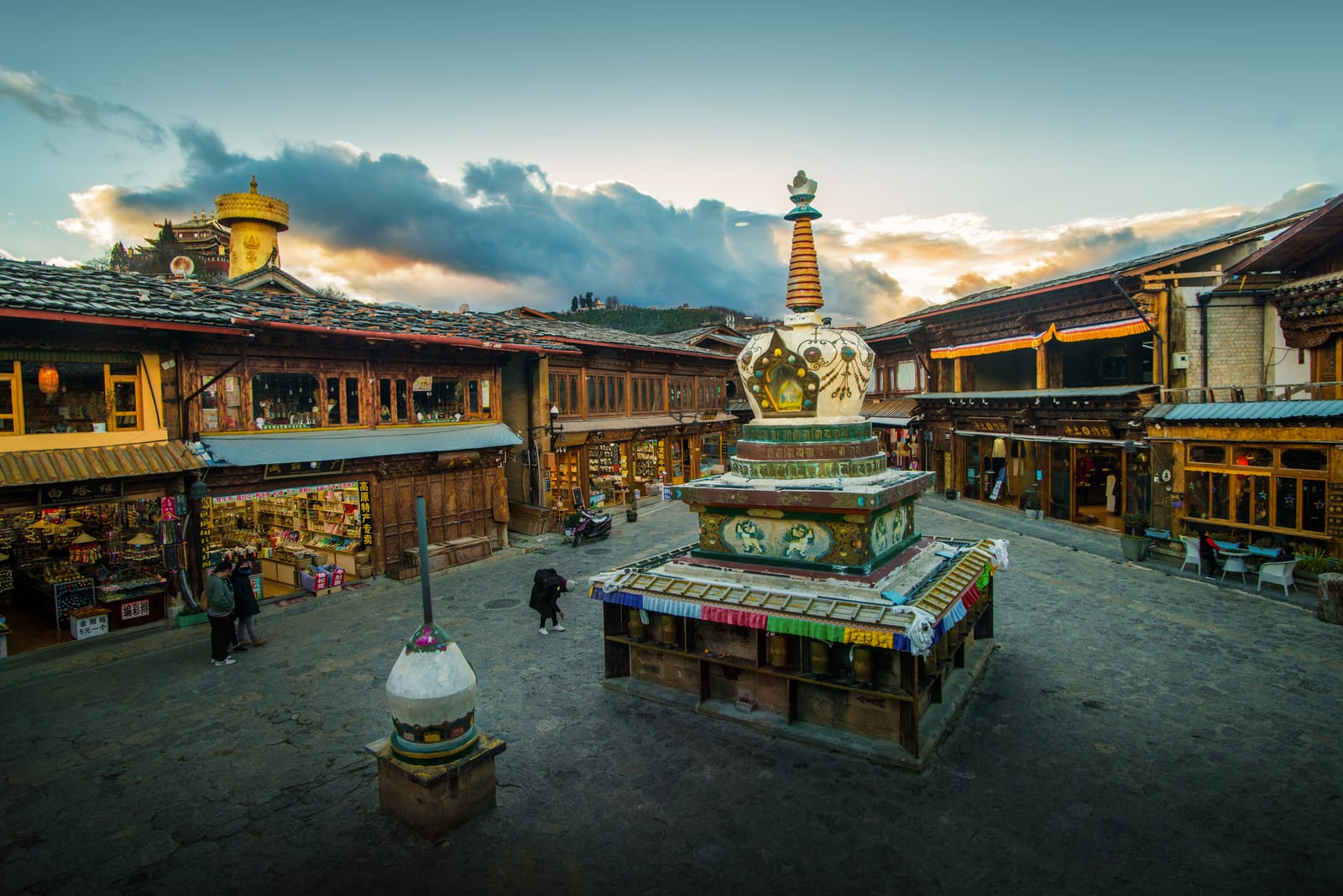
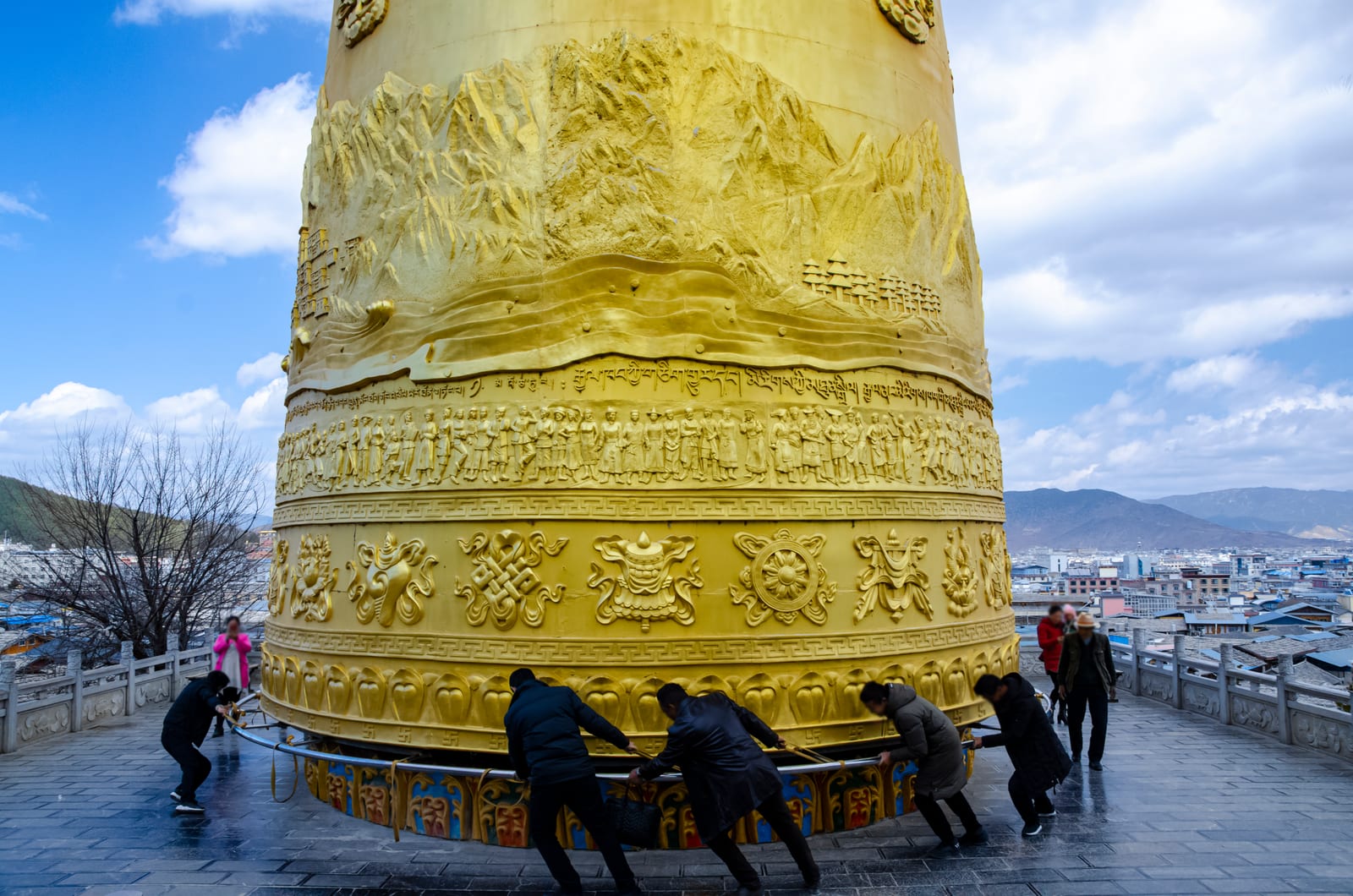
In the afternoon, explore Dukezong Ancient Town, a Tibetan settlement with over 1,300 years of history. Its name means "Moonlight City" in Tibetan, referring to the white stone houses that glow silver under the moonlight. Walk the narrow stone lanes past wooden Tibetan houses with carved window frames and prayer flags fluttering from the rooftops. Climb to Guishan Park to see the Giant Prayer Wheel — at 21 metres in height and 60 tonnes in weight, the largest Tibetan-style prayer wheel in the world. Visitors can join locals in pushing the wheel, which is said to require three or more people to turn. From the hilltop, enjoy a panoramic view of the old town and the surrounding mountains. Check into your Tibetan-style boutique guesthouse and take time to acclimatise to the altitude.
Wild Mushroom Foraging, Nixi Black Pottery Experience
Rise early and follow local Tibetan villagers into the high mountain forests to forage for wild mushrooms (seasonal, June to October). Your guides will teach you how to identify edible species — matsutake, boletus and other mountain delicacies — and where to look for them beneath the needle litter of the forest floor. Matsutake in particular depends on luck as much as on season, so sightings cannot be promised; the walk itself, however, is a rare window into the gathering traditions of Tibetan mountain life. At midday, enjoy a mushroom lunch at a local Tibetan farmhouse, tasting the foraged flavours of the season.
In the afternoon, drive approximately 30 kilometres to Nixi Village, a small Tibetan settlement nestled in a valley north of Shangri-La. Nixi is the birthplace of Tibetan black pottery, a craft with a continuous tradition spanning over 2,000 years and inscribed on China's national intangible cultural heritage list. The pottery is made entirely by hand using local red clay, shaped by the coil-building technique and fired in open outdoor pits with pine wood, which gives the finished pieces their characteristic deep black colour; traditionally, the vessels are used in Tibetan households for boiling butter tea and stewing yak meat. Under a master potter's guidance, try your own hand at the craft — kneading the clay, building the walls by hand and incising simple decorative patterns. The focus of this experience is on the process itself; should you wish to take black pottery home, ready-made pieces can be purchased directly from the village workshops.
In the evening, take a relaxed stroll through Dukezong Ancient Town at your own pace — a quiet close to the day.


Songzanlin Monastery, Flight to Chengdu
In the morning, visit Songzanlin Monastery, the largest Tibetan Buddhist monastery in Yunnan Province — conveniently located only about 8 kilometres from the airport. Founded in 1679 by the Fifth Dalai Lama and modelled on the Potala Palace in Lhasa, it is often called the "Little Potala." The monastery sits on a hill overlooking a lake and grassland, its golden roofs gleaming against the mountain backdrop. Inside, explore the main halls with their towering Buddha statues, intricate murals depicting Buddhist cosmology, and collections of Tibetan scriptures.
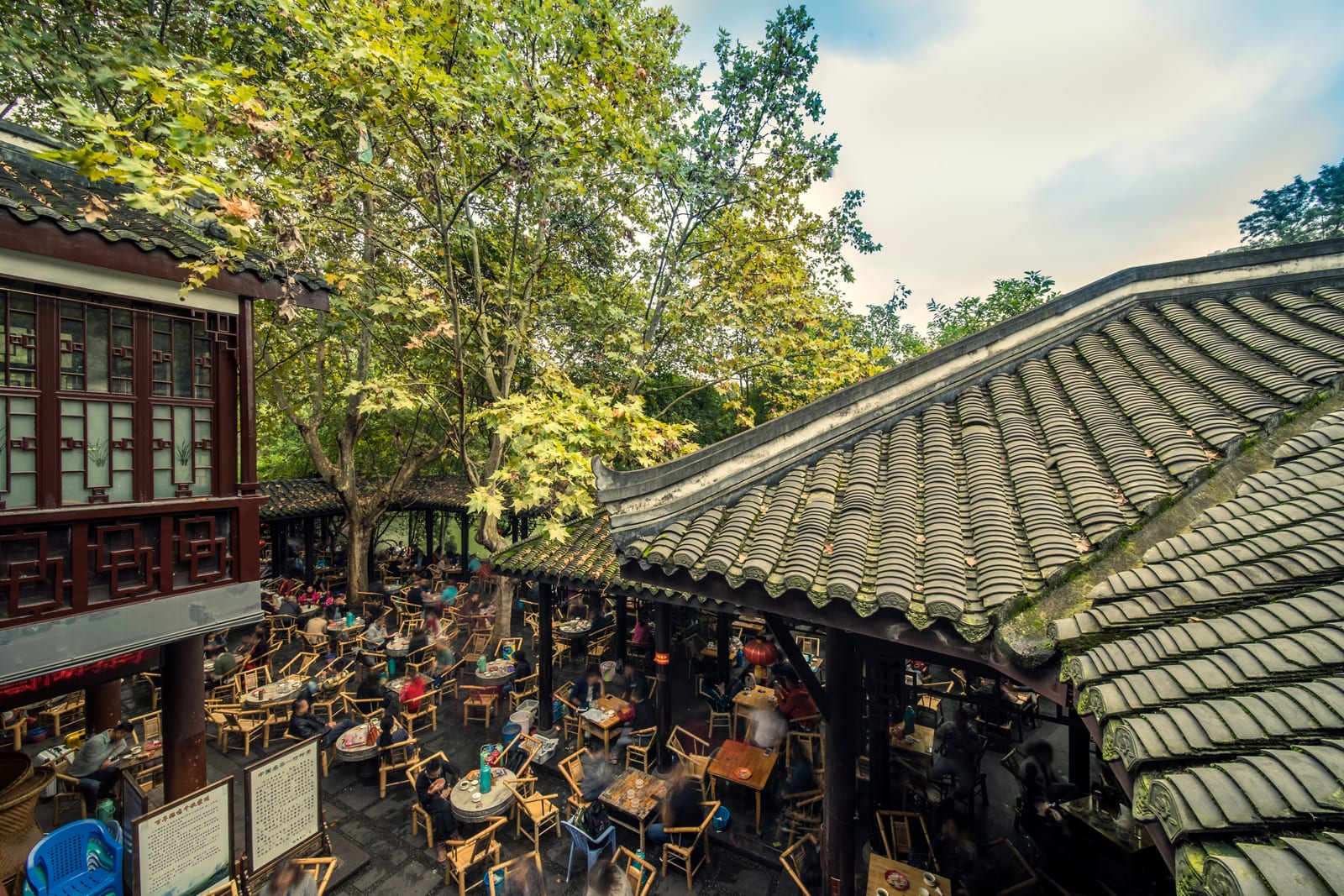
After lunch, transfer to Diqing Shangri-La Airport for an afternoon flight to Chengdu. Upon arrival in Chengdu, you will be met and transferred to your hotel in the city. In the evening, there may be time for a cup of tea at the Heming Teahouse in People's Park — where locals gather under the shade of bamboo to sip tea and watch the world go by, a first, gentle taste of Chengdu's leisurely street life.

Drive via Balang Mountain Pass, Shuangqiao Valley
Depart Chengdu early and drive westward toward Siguniang Mountain, passing Dujiangyan and Yingxiu and climbing over Balang Mountain Pass. The drive takes approximately 5–6 hours: mountain roads carry heavy traffic with many large vehicles, so the journey is taken at an unhurried, safe pace. On a clear day the pass offers a breathtaking first view of the four peaks of Siguniang Mountain — led by Yaomei Feng at 6,250 metres, the highest peak in Sichuan Province — as the landscape transforms from subtropical forest to alpine meadow and a high-altitude world of snow, rock and glacial valleys.
In the afternoon, explore Shuangqiao Valley, the most accessible of the mountain's three valleys. A scenic bus carries you deep into the 34-kilometre valley, with stops at multiple viewpoints and well-maintained boardwalks among spruce and fir forests, wildflower-carpeted alpine meadows, turquoise glacial lakes and waterfalls, with the snow-capped peaks rising above the treeline. The walking is light to moderate, with the highest viewpoints at approximately 3,800 metres, and your guide will set a comfortable pace according to the group's fitness and acclimatisation.
Arrive and check into your guesthouse in Rilong town before dark. Note: the Changping and Haizi valleys are not included on this journey (the mouth of Changping Valley is passed the following day); they may be arranged separately for keen hikers with sufficient time.

Drive along the Xiaojinchuan River to Zhonglu Village
After breakfast, drive north along the Xiaojinchuan river valley toward Danba, passing the mouth of Changping Valley without visiting. The road winds through Jiarong Tibetan villages and terraced slopes as the valley gradually opens toward the headwaters of the Dadu River.
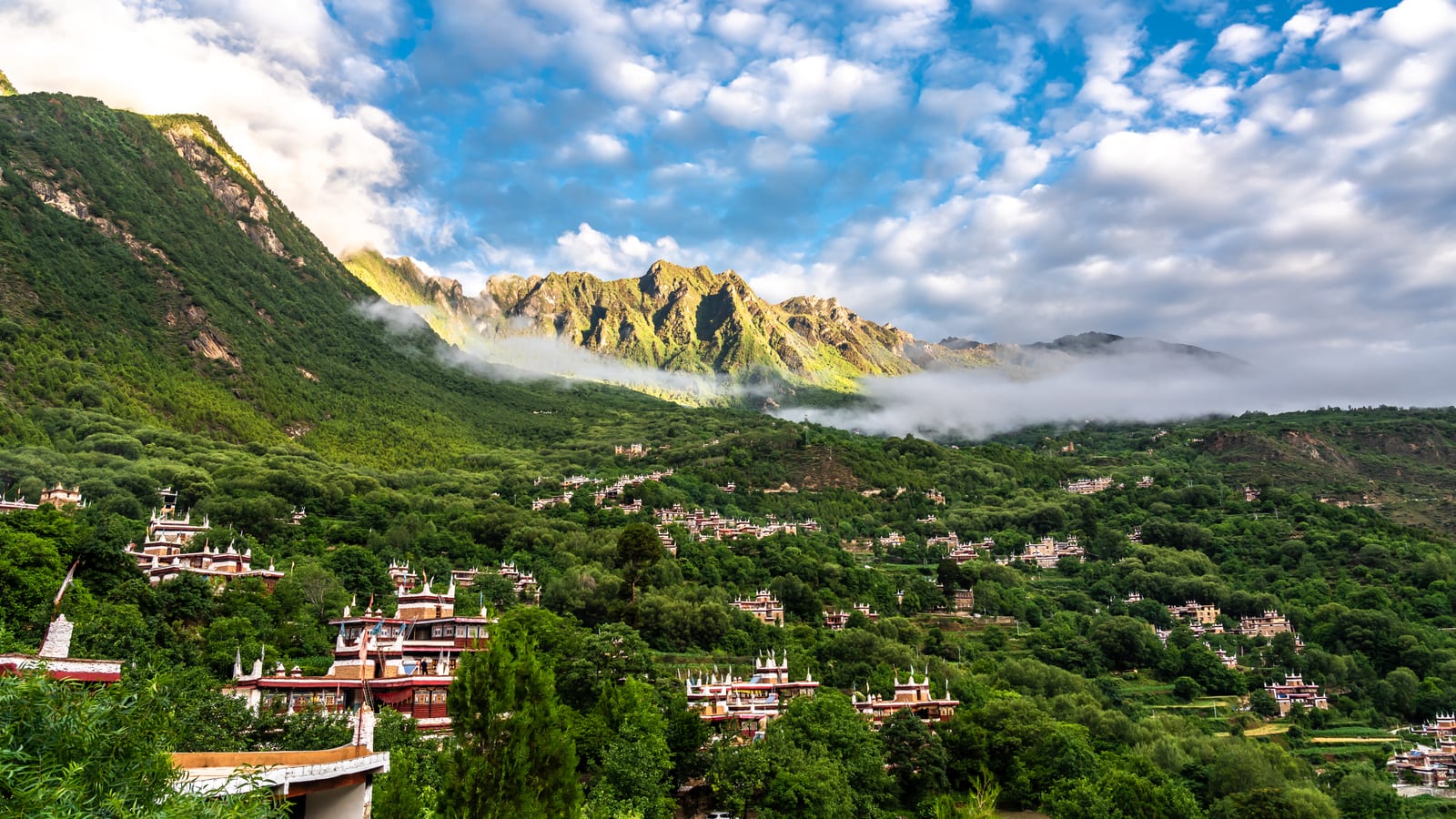
In the afternoon, arrive at Zhonglu Village, perched on a mountainside high above the river. Zhonglu is one of the most beautiful Jiarong Tibetan villages in the Danba region: stone-built Tibetan houses cluster on the slopes, ancient blockhouses rise among walnut trees, and terraced orchards drop away to the valley floor. The Jiarong are a distinct branch of the Tibetan people who have farmed these valleys for over a thousand years, developing their own language, dress and architectural traditions.
Settle into a village guesthouse, wander the lanes between the stone houses, and in the late afternoon find a viewpoint to watch the sunset gild the watchtowers and the valley below.
Zhonglu Sunrise, Suopo Watchtowers, Mo Shi Park, Tagong Grassland
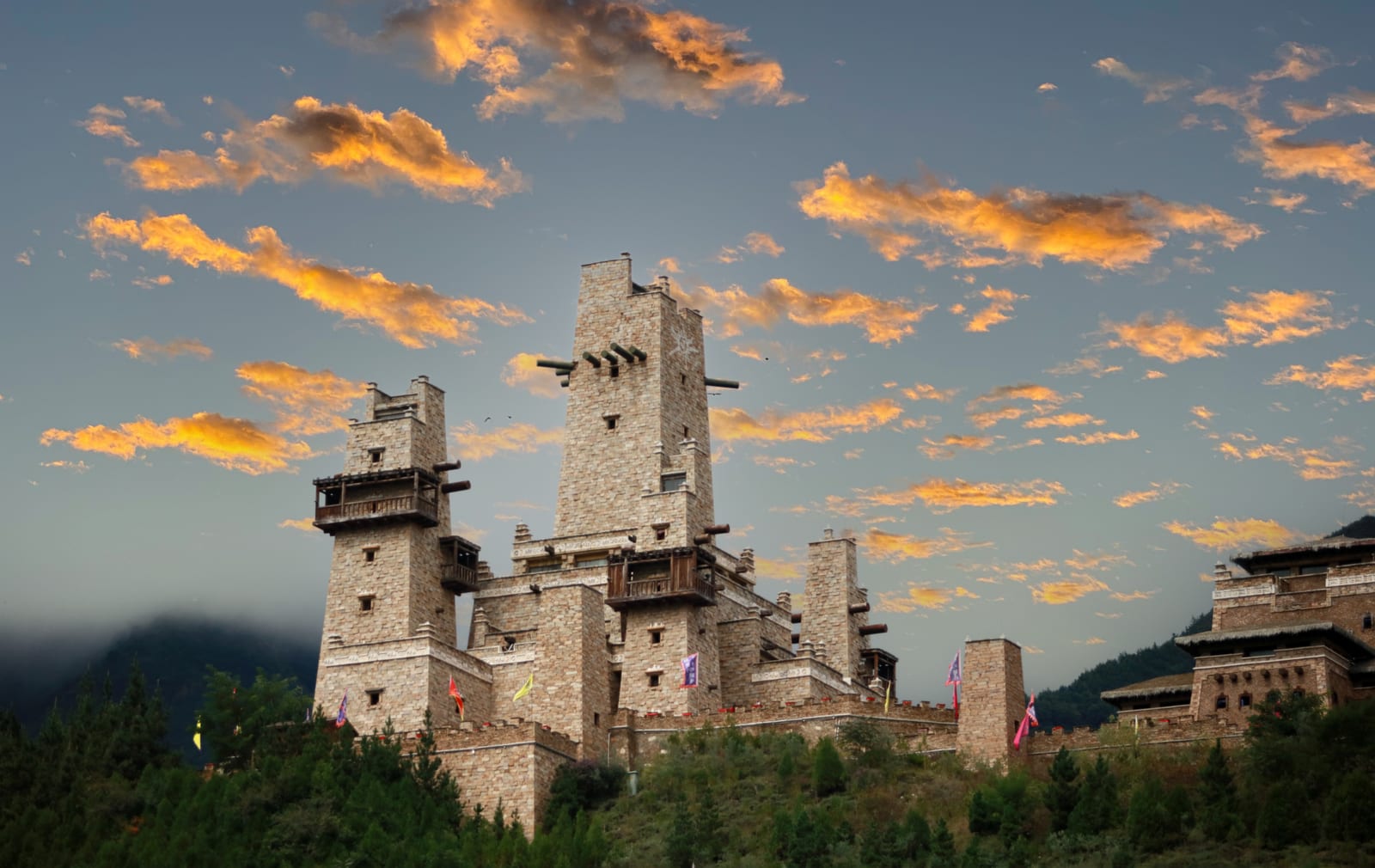
At dawn, climb to the Zhonglu viewpoint for sunrise, when morning mist drifts over the village and the first light catches the ancient watchtowers. After breakfast, continue to the Suopo watchtower viewing platform across the valley. Danba is known as the "Kingdom of a Thousand Blockhouses": hundreds of stone towers — some several centuries old and up to 30 metres in height — stand on the hillsides, built by Jiarong families over the generations for defence, storage and as symbols of prosperity.
In the afternoon, cross the Geda Liangzi pass to Bamei, a small highland town on the plateau. Just beyond it lies Mo Shi Park, a surreal geological wonder where wind and rain have sculpted grey-black stone forests, canyons and spires from the plateau's dark rock — a landscape unlike anything else on the route. After lunch, continue to the Tagong Grassland, a vast high plateau at around 3,700 metres framed by distant peaks.
Visit Tagong Temple, an important monastery of the Gelug school with a history of more than a thousand years, and the gilded Muya Golden Stupa, whose spire gleams against the backdrop of Yala Sacred Mountain. Herds of yaks and horses graze across the plateau under an impossibly wide sky. Overnight in the small town of Tagong.

Xinduqiao Photographer's Corridor, Kangding
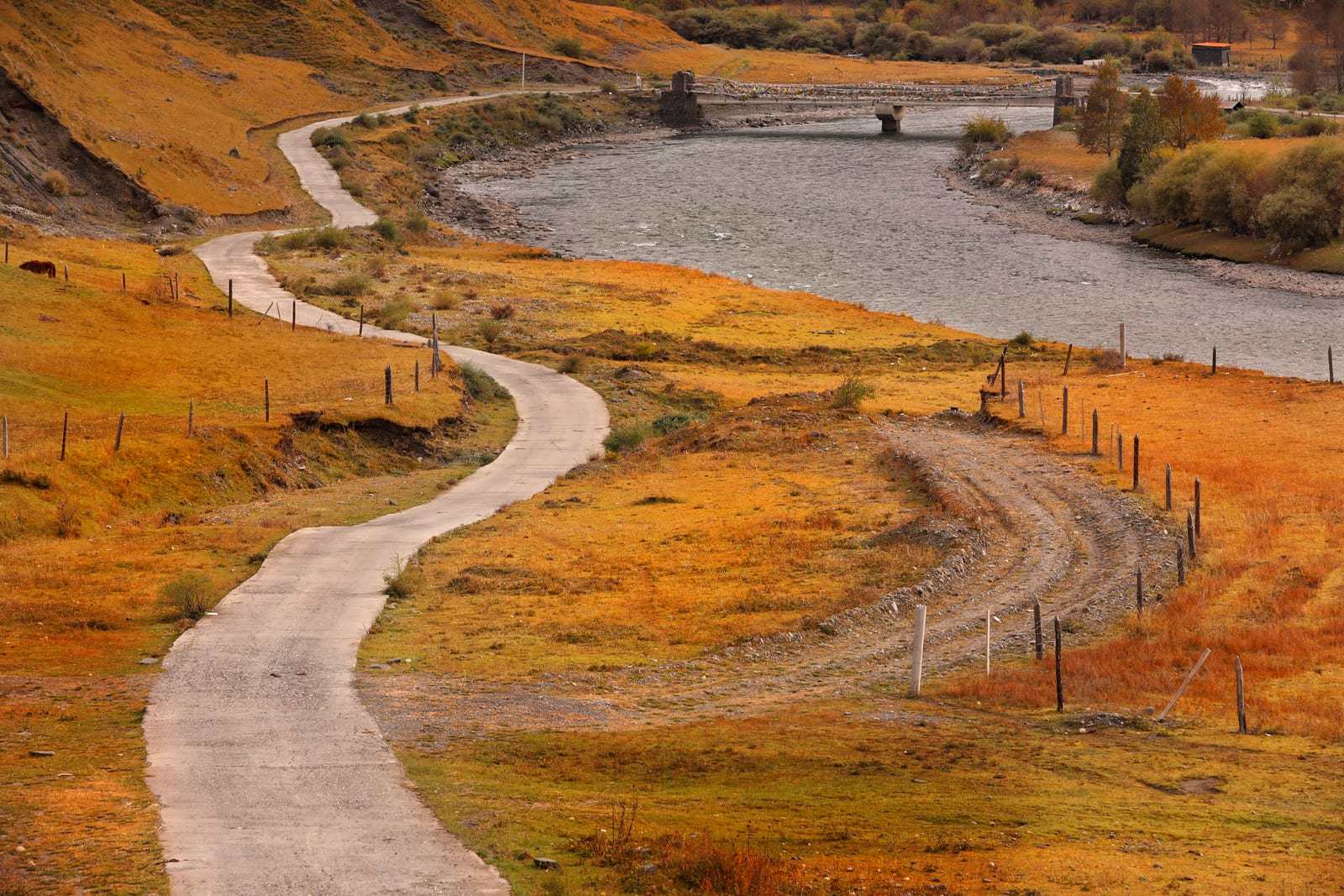
In the morning, drive through Xinduqiao, celebrated as the "photographer's corridor" of the Tibetan Plateau: Tibetan villages, poplar groves and grazing lands line the road, and in slanting morning light the scene is a classic of Kham landscapes.
Continue over Zheduo Mountain and descend to Kangding, the historic gateway between the Tibetan Plateau and the Sichuan Basin and the city immortalised in the famous "Kangding Love Song" — whose lyrics recall the horse races held on nearby Pao Ma Shan.
The town sits in a narrow valley where the fast-running Zheduo River cuts between forested mountains; take a walk along the river and through the streets of this mountain city.
Via Erlang Mountain, Ya'an
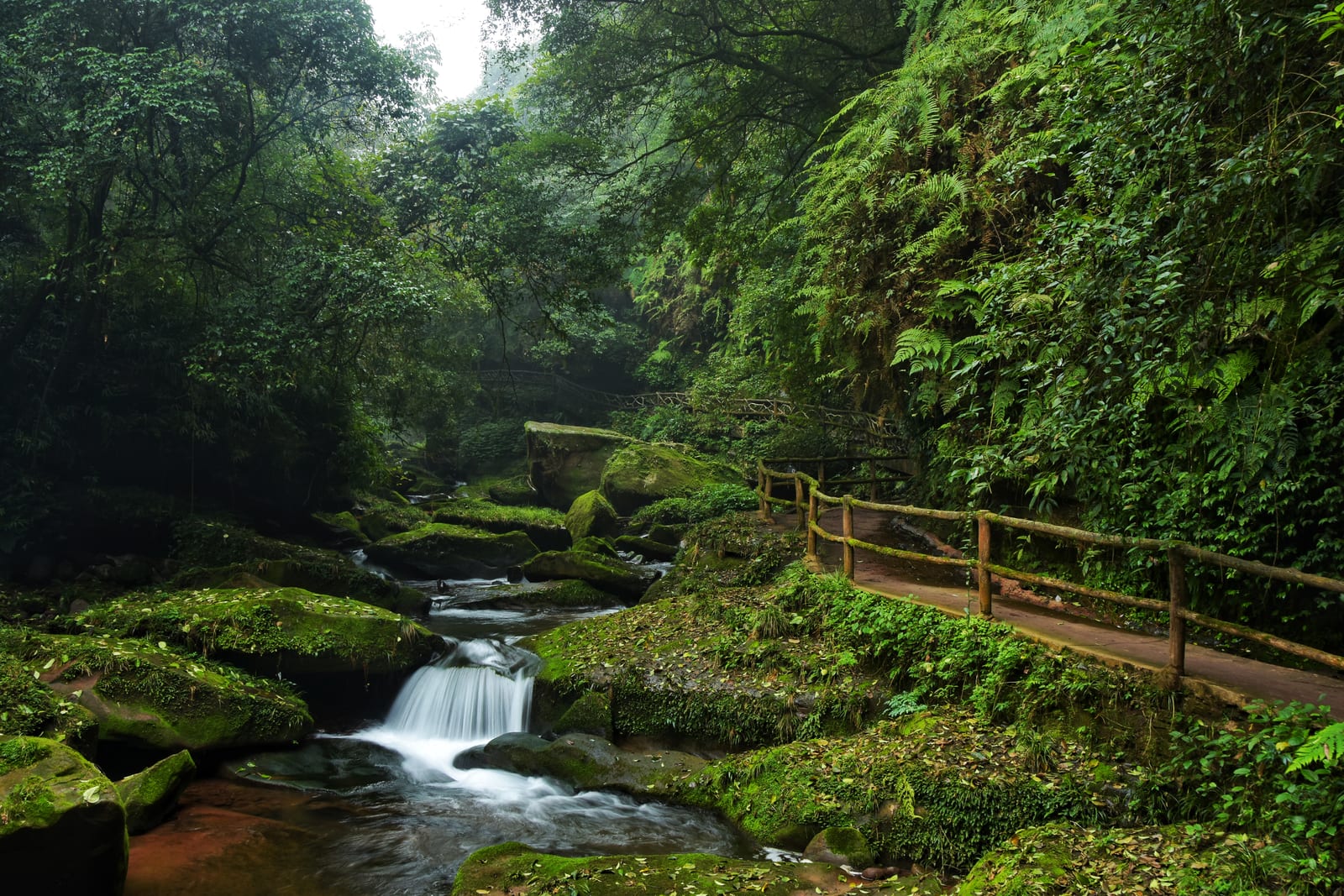
After breakfast, leave the plateau behind — crossing Erlang Mountain or taking the Yakang Expressway — and descend through lush, rain-fed forests to Ya'an, famous for its tea (the ancient Tea Horse Road began here) and for having some of the highest rainfall in China. And visit the Bifengxia Panda Base, set in a dramatic gorge where giant pandas live in semi-natural enclosures.
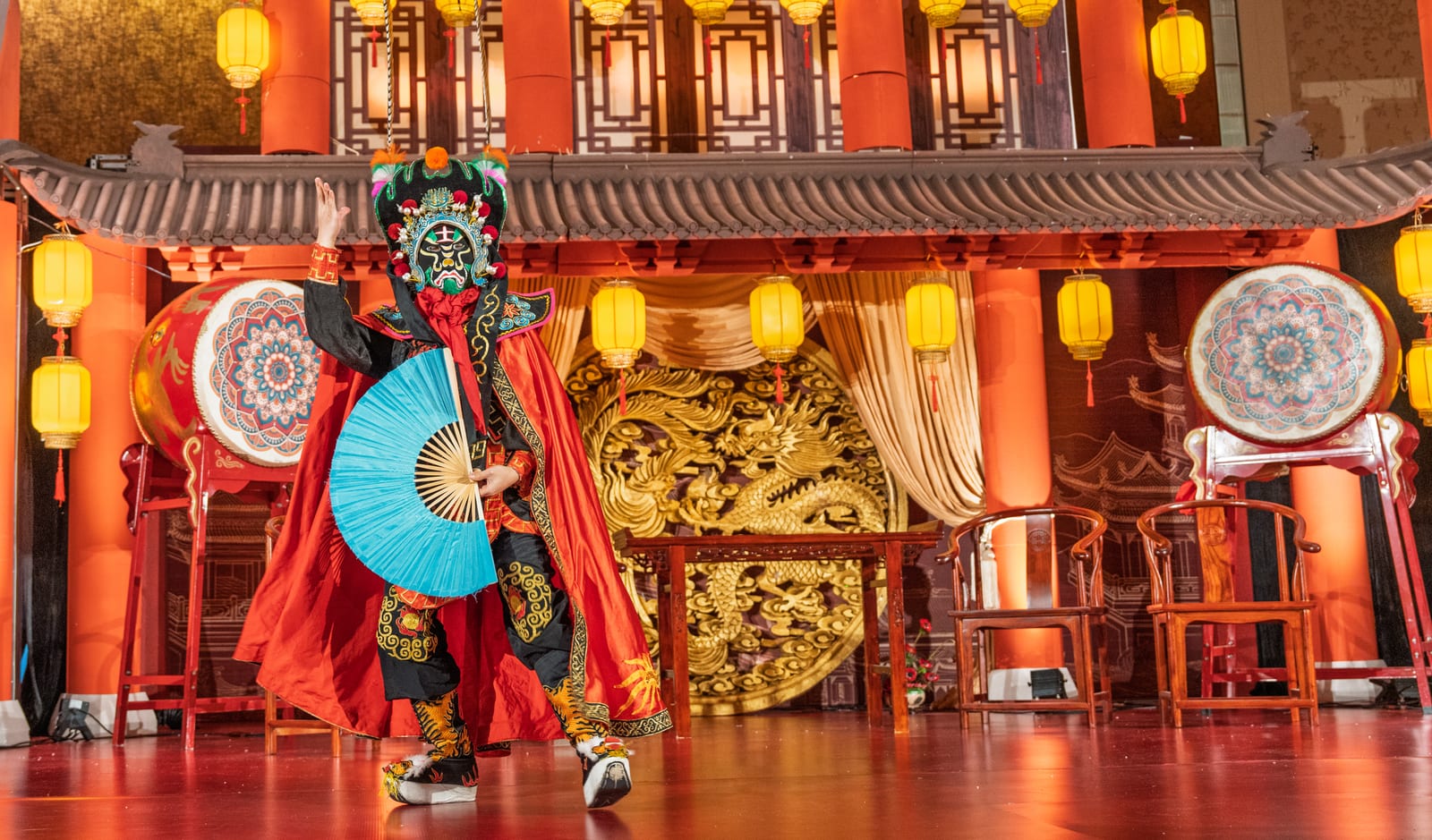
In the afternoon, continue the drive to Chengdu and check into your hotel. In the evening, celebrate the journey's end with a face-changing Sichuan opera performance — a quintessential Chengdu experience.

Departure
Enjoy a leisurely final morning in Chengdu at your own pace — relax with a cup of tea at the People's Park Heming Teahouse. When ready, your guide and driver will meet you at the hotel and provide drop-off service, transferring you smoothly to the airport for your onward journey — a pleasant and convenient end to your unforgettable journey through Yunnan and Sichuan.

What's Included & Excluded
- Hotel Accommodation: based on twin share with western style breakfast
- Guide Service: excellent English-speaking tour guide service
- Vehicle Service: air-conditioning coach with experienced drivers
- Domestic Transportation: Internal Air/high-speed train (Economy Class)/coach
- Entrance fees as per itinerary
- Internet Access:wifi in hotels
- 24/7 On-Call Support
- Airport pick-up and drop-off
- International Airfare
- Tips for guide and driver
- Personal expenses
- Entry Visa
- Optional Activities
- Payment processing fees
Add-on Options
- Dinner
- If you would like to explore more local cuisine, feel free to ask us-we will be happy to recommend the most authentic and distinctive local dishes.
Frequently Asked Questions
What is included in this private tour?
Can the itinerary be customized?
Are hotels included?
How do I book this tour?
How can I pay for the tour?
Can meals be customized according to personal needs?
You May Also Like
Charms of Yunnan: Mountain Escapes & Ethnic Cultures
8 days through Yunnan’s mountain landscapes, old towns, and living ethnic cultures
The Spirit of Southwest China: Chengdu & Tibet Explorer
From Chengdu’s Tea Houses to the Tibetan Plateau
Charms of Yunnan & Tibet: Highland Landscapes & Cultural Wonders
From Yunnan’s Ancient Kingdoms to the Tibetan Plateau
Southwest China Odyssey: Ancient Mysteries & Living Traditions
From Ancient Shu Mysteries and Dong Village Songs to Li River Landscapes and Pearl River Nights
Customize this private tour

This is a fully private tour — every route, pace, hotel level and meal can be reshaped around your dates, group size and interests.
Tell us a little and a real China specialist replies within 24 hours. No obligation.
Ready to shape your China trip?